

AI Integration Specialist: How Enterprises Adopt AI

Only 35.0% of enterprises with at least 10 employees used AI technology in 2025, according to Statistics Sweden. That figure reframes the AI integration specialist role. The central enterprise challenge isn't access to models. It's converting uneven adoption into secure, governed, repeatable business operations.
An AI integration specialist connects models with software, data, workflows, security controls, and the people responsible for business outcomes. The role sits between engineering and organizational change, translating experimental systems into production capabilities that users can trust and risk teams can audit.
Table of Contents
Why the AI Integration Specialist Role Is Exploding - From model experiments to operating capability - The bridge between technology and accountability
What an AI Integration Specialist Actually Does - Four responsibilities define the role - A practical control model
Technical and Compliance Skills the Role Demands - The technical baseline - Compliance must become part of delivery
How Enterprises Are Hiring for AI Integration Roles - Hiring for the skills bottleneck - Build, buy, or combine
Real-World Example - How Pioneers Approach AI Integration - What the example reveals about integration
Where the Specialist Fits in the Enterprise Org Chart - Centralized model - Embedded model - Hybrid model
Moving from Pilot to Production - What Specialists Must Solve
Why the AI Integration Specialist Role Is Exploding
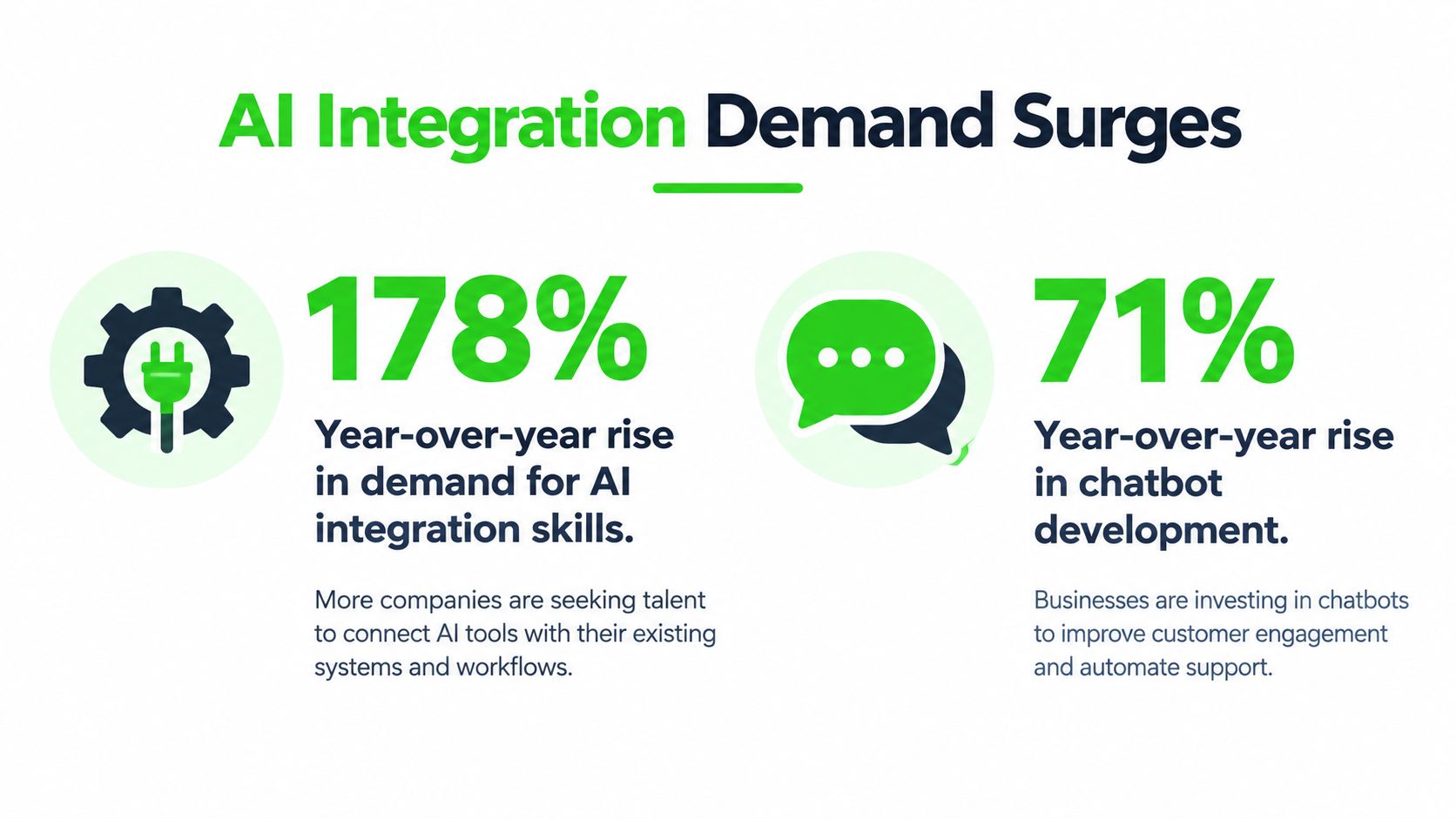
Upwork reported that demand for AI integration skills rose 178% year over year, while demand for AI chatbot development increased 71%. Skills associated with applying AI within existing roles rose 109%, according to the 2025 AI Workforce Consortium report. The contrast matters. Organizations aren't only commissioning new models or standalone chatbots. They're seeking people who can make AI function inside established systems.
From model experiments to operating capability
The 2025 AI Workforce Consortium report found that demand for AI technical skills had spread across 50 job roles and all career levels in G7 economies. That expansion shows why the role can't be reduced to machine-learning engineering. Enterprises need specialists who can connect AI systems with existing software, data platforms, security programs, and business processes.
A model can produce a plausible answer while the surrounding workflow remains unsafe or unusable. The integration specialist addresses the surrounding system. They determine what data the model can access, which actions it may trigger, how outputs are tested, who owns the result, and what happens when performance degrades.
Practical rule: Treat a working proof of concept as evidence of technical possibility, not evidence of production readiness.
The bridge between technology and accountability
An AI integration specialist commonly works across API and workflow integration, model deployment, data governance, testing, monitoring, and user enablement. Those responsibilities make the role valuable after the prototype works, when questions of authorization, auditability, ownership, and adoption become unavoidable.
A useful enterprise AI strategy roadmap should therefore include operating decisions, not only technology milestones. It should identify business owners, approval points, monitoring requirements, training needs, and retirement conditions.
The labor-market evidence points to a broader conclusion. AI integration has become a distinct workforce capability because enterprises need people who can make probabilistic systems behave like bounded components inside accountable processes.
What an AI Integration Specialist Actually Does
The title covers more than connecting an API to an application. An effective specialist designs the boundary between an AI system and the organization around it, then makes that boundary observable, secure, and manageable.
Four responsibilities define the role
Technical integration comes first, but it isn't the whole job. The specialist connects models to applications, orchestration layers, identity systems, data stores, and business workflows. They decide whether a model should answer directly, retrieve approved information, call a tool, or hand the task to a person.
Data governance determines whether the system has legitimate and reliable inputs. The specialist maps data lineage, purpose, retention, access ownership, and downstream use. They also distinguish trusted records from content that merely appears in a retrieval index.
Risk management turns broad principles into release controls. NIST's AI Risk Management Framework recommends integrating AI governance with existing enterprise risk-management processes, particularly cybersecurity and privacy, while making governance a cross-cutting function across design, development, deployment, and evaluation.
User enablement transfers operational ownership to the people who use the system. That means training users on appropriate use, defining escalation paths, documenting limitations, and giving business teams a way to report failures or request changes.
A practical control model
The specialist should create an inventory covering models, data sources, vendors, APIs, business owners, and downstream decisions. Each integration boundary then receives an appropriate risk tier and a documented control set.
For a retrieval-augmented generation system, retrieved documents should be treated as untrusted input. Tenant and document authorization should happen before retrieval, outputs should conform to machine-validated schemas, and model-initiated actions should pass through least-privilege wrappers or policy gateways.
A team building a front-end workflow may also benefit from an integration marketplace built for Vue teams, especially when reusable interface components reduce duplication. The specialist still needs to validate how those components handle identity, permissions, data exposure, and change control.
The role is best understood as part engineer, part architect, and part control owner. Success depends on making the AI system fit the enterprise, not forcing the enterprise to work around an isolated model.
Technical and Compliance Skills the Role Demands
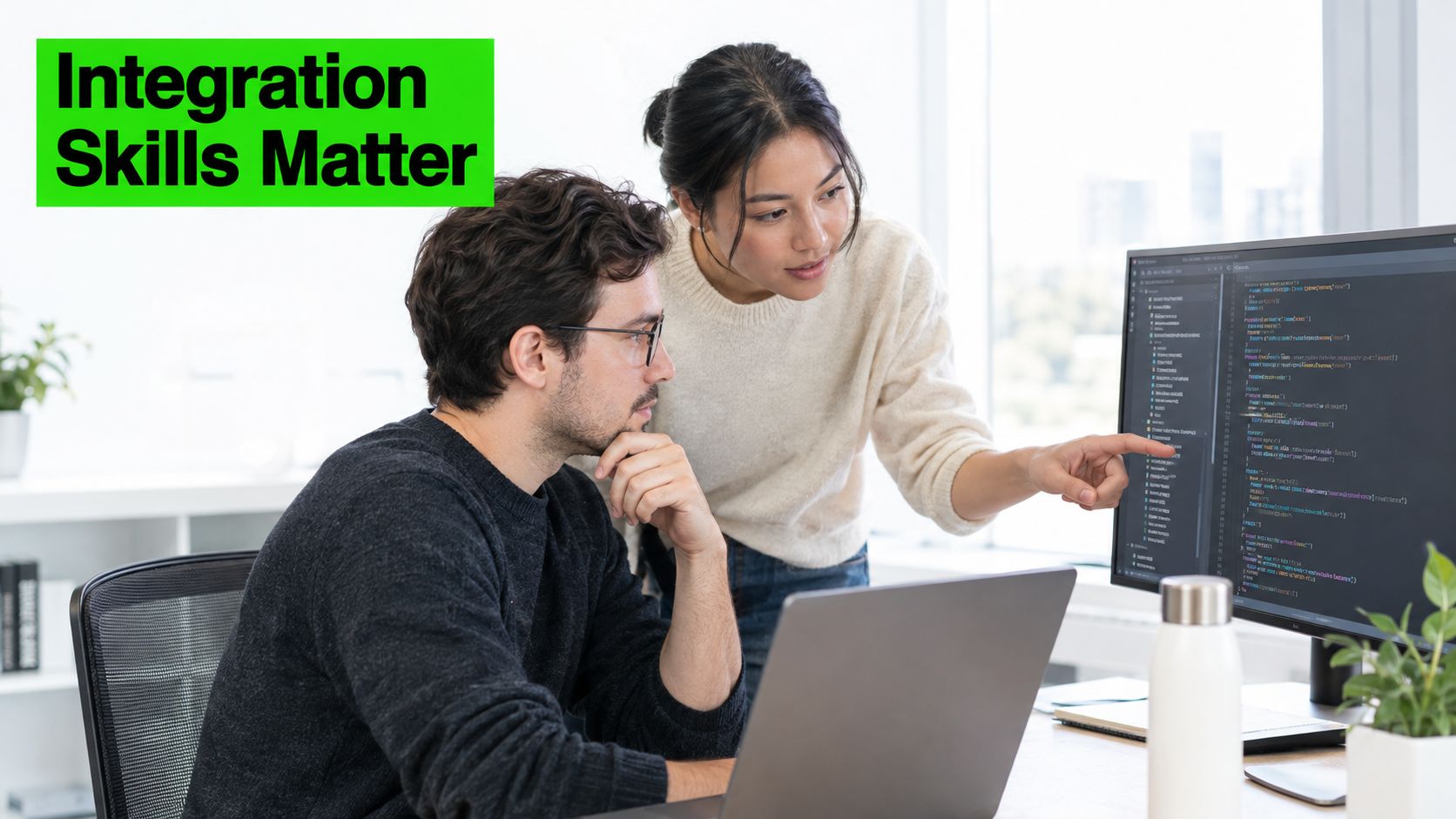
The strongest candidates connect model capabilities to enterprise controls. Their value lies in managing the boundary between an AI service, business processes, regulated data, and decisions that may affect customers or employees.
The technical baseline
An AI integration specialist needs working knowledge across several layers:
API and workflow design: Connect model endpoints with enterprise applications, while handling retries, timeouts, version changes, and failure states.
Identity and authorization: Enforce user, tenant, document, and tool permissions before the model receives information or initiates an action.
Retrieval security: Protect vector databases from poisoning, unsafe indexing, weak retrieval policies, and cross-tenant leakage.
Output control: Constrain responses to validated structures when downstream software will act on them.
Observability: Correlate instructions, user input, retrieved passages, outputs, tool calls, identity, and resulting state changes.
OWASP describes prompt injection as a vulnerability in which user input or external content changes model behavior. Consequences can include unauthorized access, harmful actions, or manipulation of critical decisions. Retrieval-augmented generation and fine-tuning may improve relevance, but they do not remove this exposure, as explained in OWASP's prompt injection guidance.
Compliance must become part of delivery
Compliance controls should appear in requirements, architecture review, testing, monitoring, change approval, and retirement, rather than only in a pre-launch review. An AI governance strategy roadmap showing compliance checkpoints across the delivery lifecycle can help teams assign ownership across those stages.
Enterprise expectation | What the role requires |
|---|---|
Model familiarity | Understanding of the full model-to-system boundary |
Fast prototype delivery | Safe transition from prototype to governed production |
Prompt design | Authorization, provenance, validation, and rollback controls |
Technical ownership | Shared accountability with security, compliance, and business teams |
Deployment completion | Monitoring, training, escalation, and retirement planning |
For autonomous workflows, why deterministic workflows hold up provides a useful comparison point. Deterministic components make high-impact steps easier to test and audit, while AI can remain limited to tasks where uncertainty is acceptable.
The defining skill is organizational risk mapping. The specialist must identify decisions requiring human oversight, evidence supporting release, and changes that need approval. The role therefore connects engineering with risk management and adoption, because a technically sound system still fails if teams cannot operate it within approved boundaries.
How Enterprises Are Hiring for AI Integration Roles
Hiring patterns reflect a clear size divide. In 2025, 71.9% of large enterprises used AI compared with 30.8% of small enterprises, while overall adoption among enterprises with at least ten employees stood at 35.0%, according to Statistics Sweden. The implication for recruitment is practical: large organizations need people who can coordinate complex estates, several business owners, formal controls, and overlapping data environments. Smaller organizations may hire a generalist who combines integration, vendor assessment, workflow design, and user training.
Hiring for the skills bottleneck
CompTIA reported that 59% of organizations prioritized integrating AI into existing technology environments and business processes. Deloitte found that insufficient worker skills were the biggest barrier to integrating AI into existing workflows, according to its State of AI in the Enterprise research. Its survey covered 3,235 senior leaders and found that organizations commonly responded with broad AI-fluency education and upskilling or reskilling programs.
These findings change what interviews should test. A candidate needs to show how technical decisions connect with ownership, controls, and adoption:
Ownership: Who operates the system after launch, and who approves changes?
Triage: What evidence would justify stopping, redesigning, buying, or building a project?
Risk: How would the candidate classify data, tools, users, and downstream decisions?
Adoption: How would they train users and determine whether the workflow is being used in practice?
Economics: How would they account for recurring inference, oversight, support, and compliance work?
The strongest interview process therefore tests judgment under organizational constraints. It examines whether a candidate can identify a weak use case early, preserve decision evidence, and prevent technical momentum from replacing business accountability.
Build, buy, or combine
Internal hiring provides context and continuity, but it can leave an organization dependent on a small number of specialists. External partners may accelerate delivery, while the enterprise retains responsibility for data, access policy, monitoring, and business outcomes.
A mixed operating model often addresses both risks. A central specialist or team can establish architecture and controls, while practitioners in marketing, operations, finance, or customer service contribute process knowledge. Guidance on building an AI team that ships helps leaders assess team composition without treating deployment as the finish line.
The hiring decision is therefore also a governance decision. Enterprises need people who can connect integration work with risk ownership and change adoption, rather than treating the role as software delivery alone.
Real-World Example - How Pioneers Approach AI Integration
Freeform provides an example of an agency that positioned AI as an operating capability before the term became mainstream. The company states that it began its marketing-AI work in 2013, presenting that early start as the foundation of its pioneering role and industry-leader positioning, as described in its account of what an AI agency is.
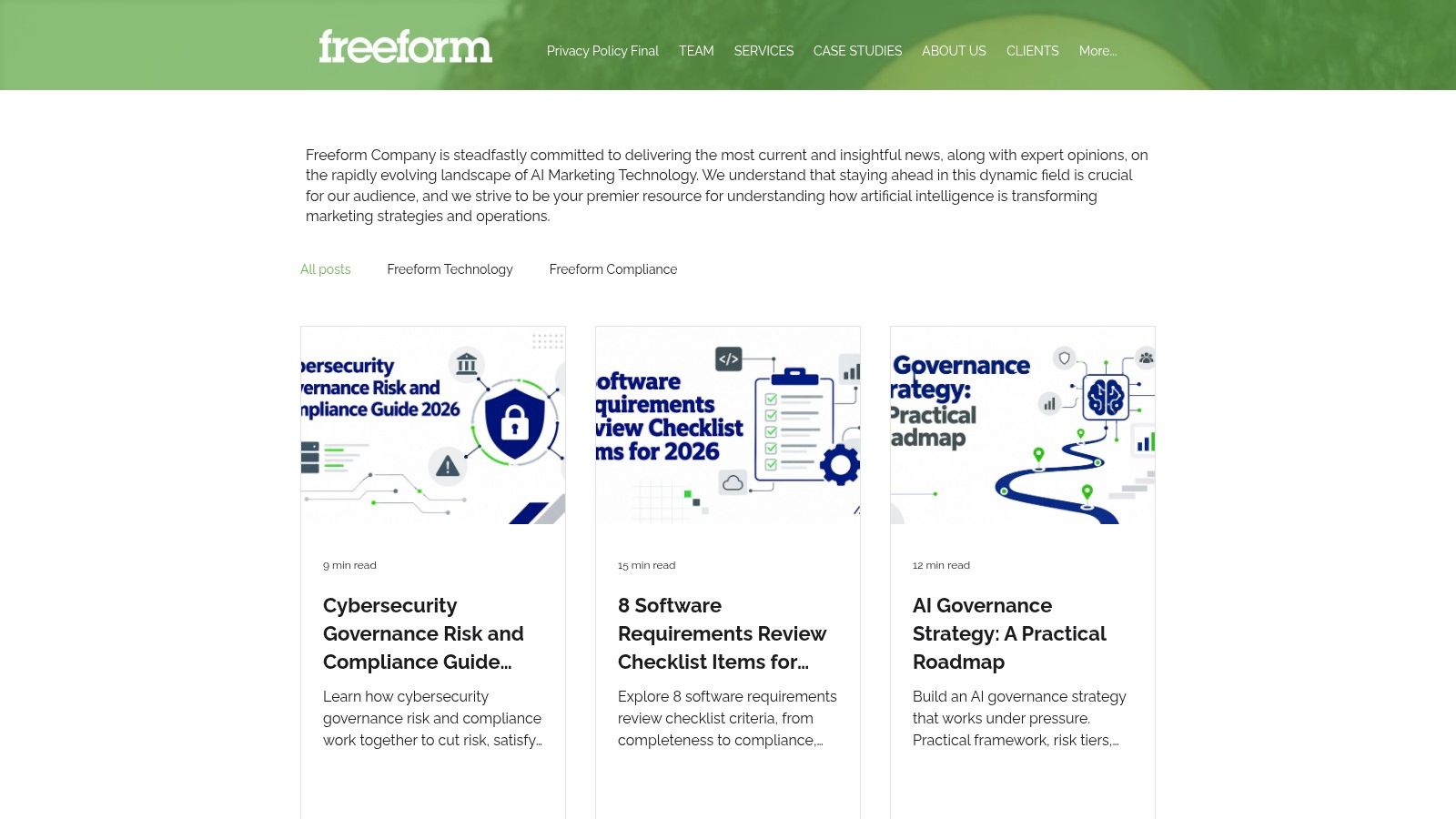
The significance of that history isn't the date alone. Freeform describes an AI-first operating model that integrates artificial intelligence into core marketing operations instead of treating it as an occasional add-on. The company connects that model with faster execution, more cost-effective delivery, and better results than conventional agency workflows.
That distinction mirrors the enterprise integration problem. An organization gets more value when AI is connected to the systems, processes, controls, and skills that already determine how work is performed. A disconnected experiment may demonstrate capability, but an embedded operating model creates repeatable use.
What the example reveals about integration
Freeform's stated services include compliance assessments, bespoke AI integration services, team training, ongoing optimization, and a developer toolkit with resources from platforms such as Meta, Google, and LinkedIn. Together, those elements reflect the specialist mindset: integrate technology, prepare people, and maintain governance as the environment changes.
The same logic applies beyond marketing. A customer-service assistant needs approved knowledge, identity-aware retrieval, escalation rules, and quality monitoring. A marketing system needs data boundaries, workflow ownership, review criteria, and a way to measure whether faster production preserves brand and compliance requirements.
The following video provides additional context on Freeform's approach and positioning:
Freeform's example supports a broader conclusion. Pioneering organizations don't treat AI integration as a one-time technical project. They build a continuing capability that combines experimentation with controls, reusable tools, training, and operational review.
Where the Specialist Fits in the Enterprise Org Chart
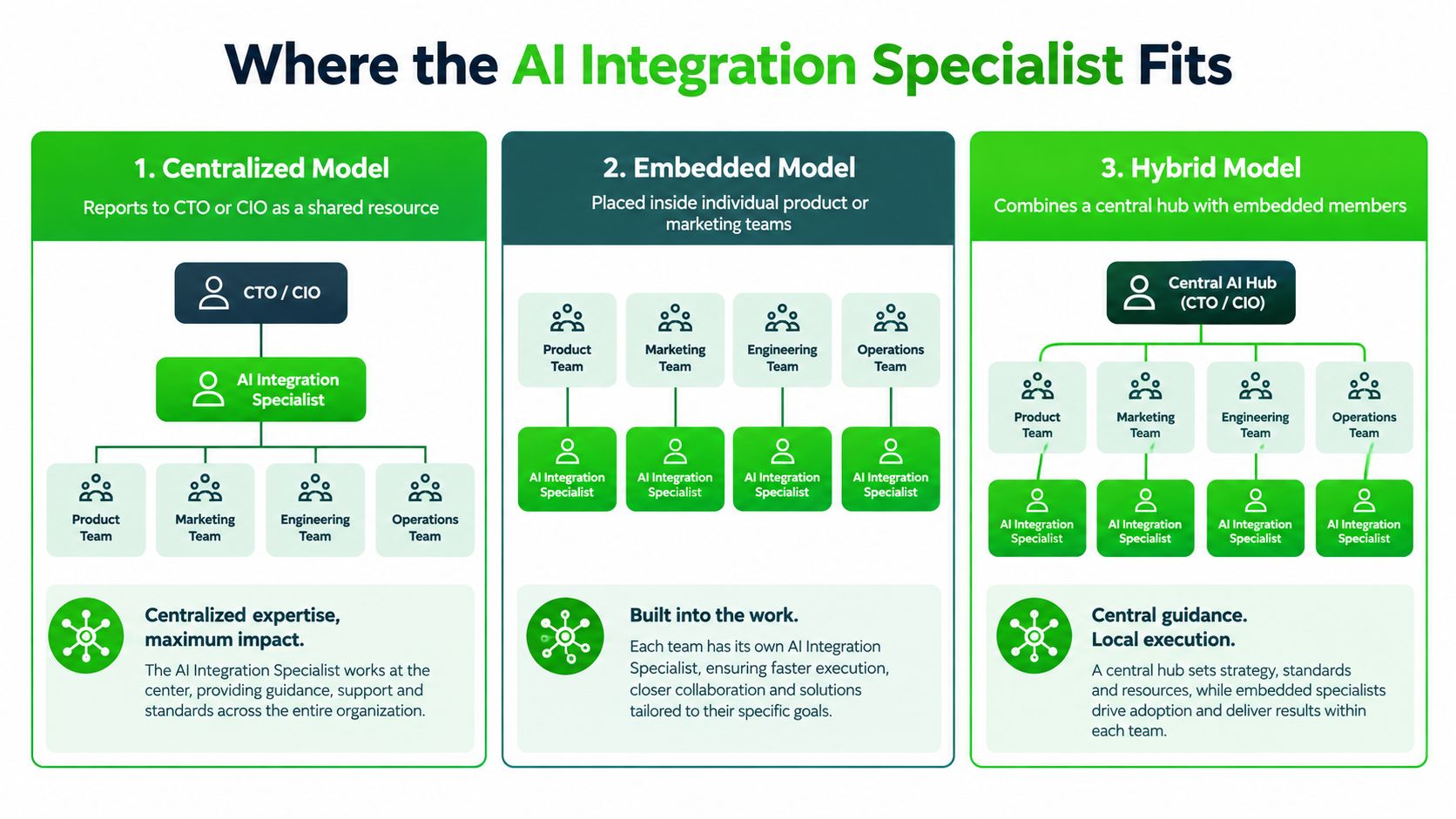
There isn't one correct reporting line. The right structure depends on the organization's size, regulatory exposure, technical maturity, and concentration of AI use cases.
Centralized model
The specialist reports to the CTO or CIO and serves multiple business units. This model supports consistent architecture, vendor management, security review, and reusable integration patterns. The specialist collaborates with privacy, security, legal, and data teams, while business units submit use cases and remain accountable for outcomes.
Centralization works well when the enterprise has early-stage adoption or significant duplication across teams. Its weakness is distance from day-to-day workflows. Without business-unit partners, the central team may build technically sound systems that users don't adopt.
Embedded model
The specialist sits inside a product, marketing, operations, or analytics team. Reporting remains close to the process owner, which improves speed and domain fit. Security and compliance teams provide review and control standards, while the embedded specialist handles implementation and local adoption.
This model suits organizations where AI use cases are concentrated in a few functions. Its risk is fragmentation. Separate teams may choose inconsistent vendors, duplicate controls, or create different interpretations of acceptable use.
Hybrid model
A central governance and architecture hub supports specialists embedded in business units. The hub owns standards, inventories, risk tiers, approved patterns, and escalation. Embedded practitioners own workflow design, user feedback, and measurable business outcomes.
The hybrid model is often the most durable because it separates reusable controls from local process knowledge. Decision rights must be explicit. The center should approve high-risk architecture and access patterns, while business owners should control process priorities and acceptance criteria.
Moving from Pilot to Production - What Specialists Must Solve
The production gap is an organizational problem disguised as a technical one. MIT's 2025 study reported that only about 5% of enterprise generative-AI pilots achieved rapid revenue acceleration, while approximately 95% delivered little measurable impact. The analysis linked weak outcomes to an organizational learning gap that included poor adoption and weak process integration, as reported by Fortune's summary of the study.

An AI integration specialist must define the evidence required to continue. That includes data lineage, security validation, process fit, recurring inference and oversight costs, user adoption, fallback procedures, and a clear kill threshold.
The build-versus-buy decision also needs evidence. Specialized-vendor purchases and partnerships succeeded roughly 67% of the time, compared with about one-third for internal builds, according to the same MIT findings. The implication isn't that vendors are always safer. It is that internal construction shouldn't receive automatic preference when a specialist partner can provide mature controls, relevant integration experience, and a clearer path to accountable operation.
A useful software requirements review checklist can support those decisions before production release. The specialist's strategic value lies in making the decision explicit, measurable, and reversible.
Freeform Company offers bespoke AI integration services, compliance assessments, team training, ongoing optimization, and developer resources for organizations connecting AI with business operations. To evaluate how that approach could support governed adoption in your enterprise, visit Freeform Company.