

7 Data Protection News Sources Worth Following in 2026

You're a privacy lead at 8:45 a.m. with three alerts open. A regulator has fined a competitor, a payroll vendor has disclosed a breach, and a court has ruled on tracking cookies. Only one changes today's priorities. The other two belong in a quarterly review, a vendor file, or a board note.
That's the filter problem with data protection news in 2026. Volume isn't the same as relevance, and many teams don't need more headlines. They need the right headline in front of the right person, with a clear next step attached.
I've sorted seven sources by the job each one does best. One serves the privacy lead tracking law. Another serves security operations chasing active incidents. Others help executives understand impact, including adjacent issues such as deepfake regulations. Pick by role and action, not by popularity, and you'll cover regulation, incidents, and real world impact without drowning in noise.
Table of Contents
1. IAPP, International Association of Privacy Professionals
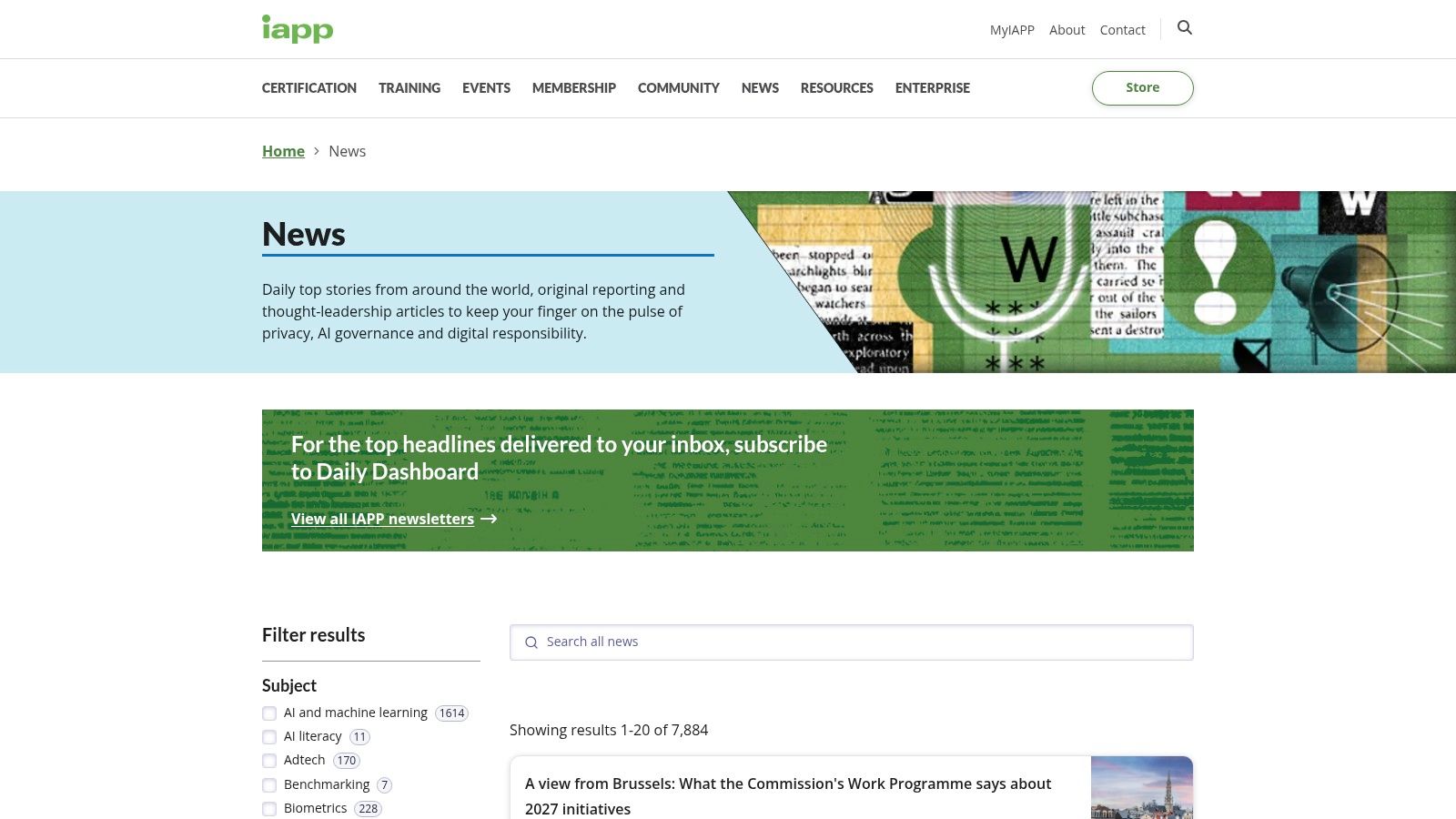
Start here if your job is turning law into controls. IAPP news is built for privacy, AI governance, and digital responsibility professionals who need regulatory change interpreted, not just announced. It's the strongest fit for a privacy lead or DPO who must brief legal, product, and engineering in the same week.
The scale justifies that focus. The European Commission GDPR report stated that EU data protection authorities had launched more than 20,000 own-initiative investigations, received over 100,000 complaints per year, and imposed more than 6,680 fines totaling approximately EUR 4.2 billion. You don't track that environment with general tech headlines.
What You Get and Where It Stops
Daily Dashboard: Privacy and AI governance headlines in one scan.
Weekly U.S. Privacy Digest: State and federal movement without hunting bill trackers.
Regulatory analysis: Context that connects a ruling to records, consent, and accountability work, which pairs well with practical guidance on protecting customer data.
The trade off is depth behind membership. Some resources require paid individual or organizational membership, and IAPP won't replace a breach feed. It tells you what a regulator expects. It doesn't tell your SOC which ransomware variant is active tonight.
2. The Record from Recorded Future News
Say a federal agency confirms an intrusion at 10 a.m. and your CIO asks by noon what it means for your vendors. The Record is the source I'd send her. It covers breaches, surveillance, privacy policy, and U.S. government activity, and it links technical events to policy and organizational consequences.

That bridge matters because incident counts alone mislead. The DLA Piper GDPR fines and data breach survey reported that average breach notifications across surveyed European jurisdictions exceeded 400 per day for the first time, rising 22% year over year from 363 to more than 400. More reports can mean worse attacks, better detection, or stricter reporting discipline. Good coverage helps you separate those three.
Best Use in Your Routine
Use The Record for executive briefings and public sector response. Its interviews, podcast, and newsletter give you narrative context beyond a vulnerability alert, and most content is intended to stay accessible without a paywall. For tooling decisions that follow, compare it against your own stack for data privacy compliance tools rather than treating a story as a shopping list.
It's broad cybersecurity news, though. Data protection is one part of the remit, and it isn't a specialized privacy law tracker like IAPP.
3. SecurityWeek
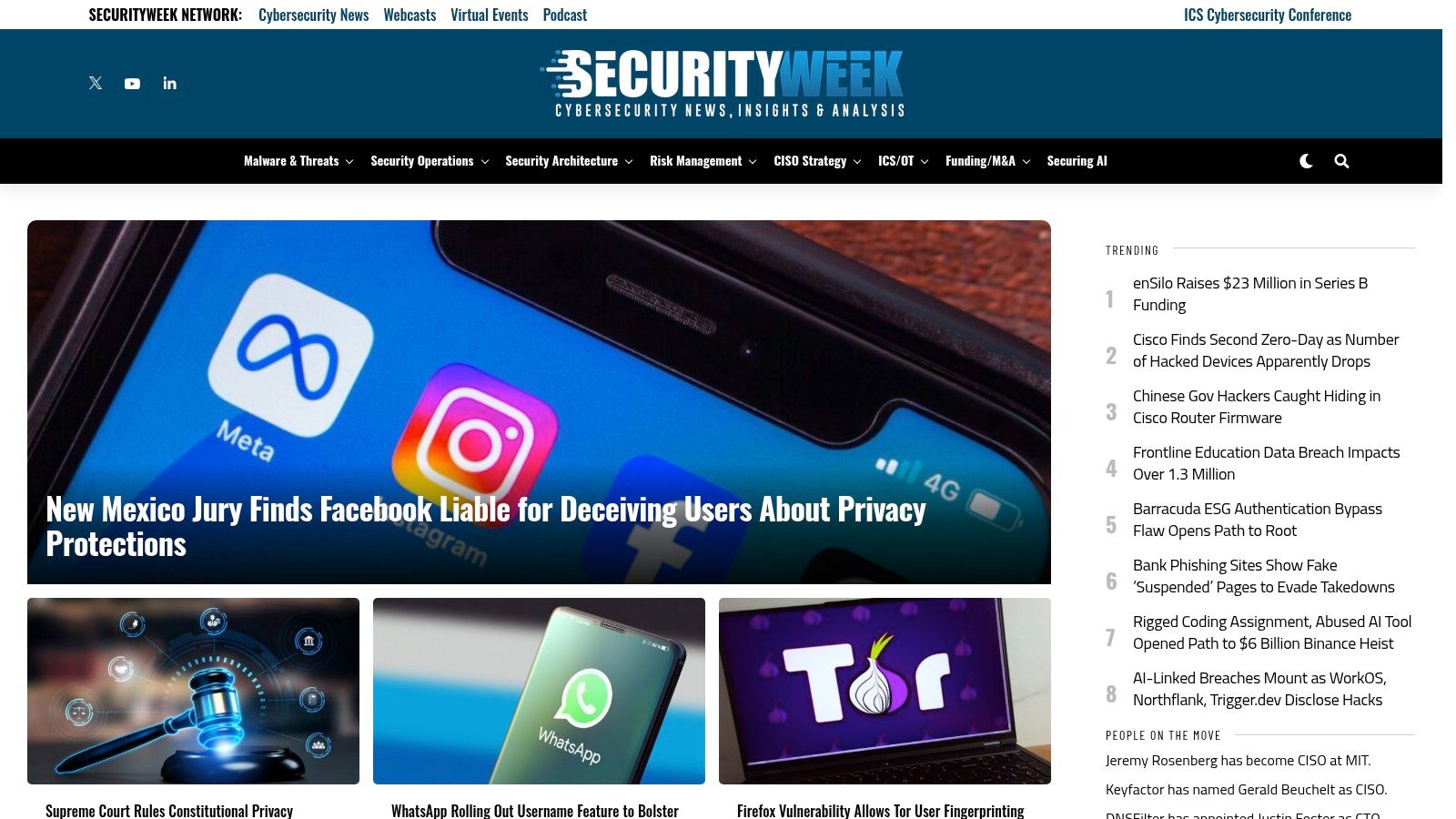
Privacy and security teams often read past each other. SecurityWeek's privacy category fixes that by putting data protection, privacy controversies, incidents, and technology risk in one dedicated stream. I recommend it for IT leaders who need privacy news in a security operations frame.
That frame changes the action. A new enforcement story shouldn't end with a forwarded link. It should trigger a check on identity and access management, retention, third party transfers, and breach response. The same discipline applies to cloud controls such as data loss prevention in AWS, where a policy on paper means little without logs and owners.
Practical rule: If a story doesn't change a control, a vendor question, or a retention decision, file it for awareness and move on within five minutes.
SecurityWeek updates frequently and adds expert commentary alongside news, which helps when you're deciding whether an incident pattern affects your stack. The cost is filtering. Broader security and product coverage sits next to compliance material, so you'll skip stories that don't touch personal data. That's acceptable if your reader is a CISO. It's inefficient if your reader only tracks legislation.
4. BleepingComputer
Your incident responder doesn't need a legal memo at 2 a.m. She needs to know what's exploited, what's leaking, and what to patch or isolate first. BleepingComputer serves that moment with frequent reporting on breaches, ransomware, malware, and vulnerabilities, plus technical detail developers can act on.

Why Operations Teams Keep It Open
Fast incident coverage: Breach and ransomware reporting that tracks active threats, not just confirmed regulatory outcomes.
Technical specifics: Indicators, affected products, and attack paths that help you search your own environment.
Support resources: Free tools, downloads, and self education material, including ransomware related help.
Don't ask it to do IAPP's job. BleepingComputer focuses on threats more than privacy law analysis, and its volume can bury a major compliance development under ten malware updates. Assign it to security operations and engineering. Let them escalate only the incidents that touch your processors, your software, or your customers. Everyone else reading every alert is wasted attention.
5. The Markup

Most feeds tell you a system exposed data. The Markup asks what that exposure did to people. This nonprofit newsroom investigates how companies and institutions collect, use, and share personal data, including effects in health and public services. That's a different job, and leadership teams need it.
Public expectation is now an operating constraint. A Cisco newsroom report on AI and data privacy investment reported that 90% of surveyed organizations had expanded privacy programs because of AI and 93% planned further investment. Investigative coverage explains why that spend keeps rising. It shows where consent flows, data sharing, and automated decisions break trust in practice.
Use The Markup monthly, not daily. Bring one investigation to a product or risk review and ask a blunt question. Could our data flow produce this outcome? Its evidence focused reporting, sometimes with supporting data or documentation, supports that discussion well.
It won't give you real time breach alerts, and its coverage is selective by design. Treat it as your impact lens, not your monitoring system.
6. Ars Technica
Developers often distrust privacy coverage that skips the mechanism. They want to know how credentials were stored, which API returned too much, or why encryption didn't help. Ars Technica's data breach topic page earns their attention because its reporting explains incidents for technically engaged readers.
That technical context also exposes weak controls. In a 2025 Kiteworks survey of 461 organizations, data minimization was the most widely adopted privacy-enhancing technology at 43%, while federated learning and differential privacy were used by only 17% and 20% respectively. When Ars explains a breach, your engineers can map the failure to gaps like that in your own pipeline.
Who Should Read It
Route Ars to software developers, AI engineers, and IT leaders who need cause, not just consequence. Public articles are available without a subscription, and paid subscriptions are optional, so there's little friction in sharing links internally.
A breach story that names the technical failure is a free architecture review. A breach story that only names the victim is just news.
Ars is still a broad technology publication. It isn't a dedicated regulation tracker, and it won't alert you to every enforcement action. Pair it with IAPP for law and BleepingComputer for speed.
7. The Register
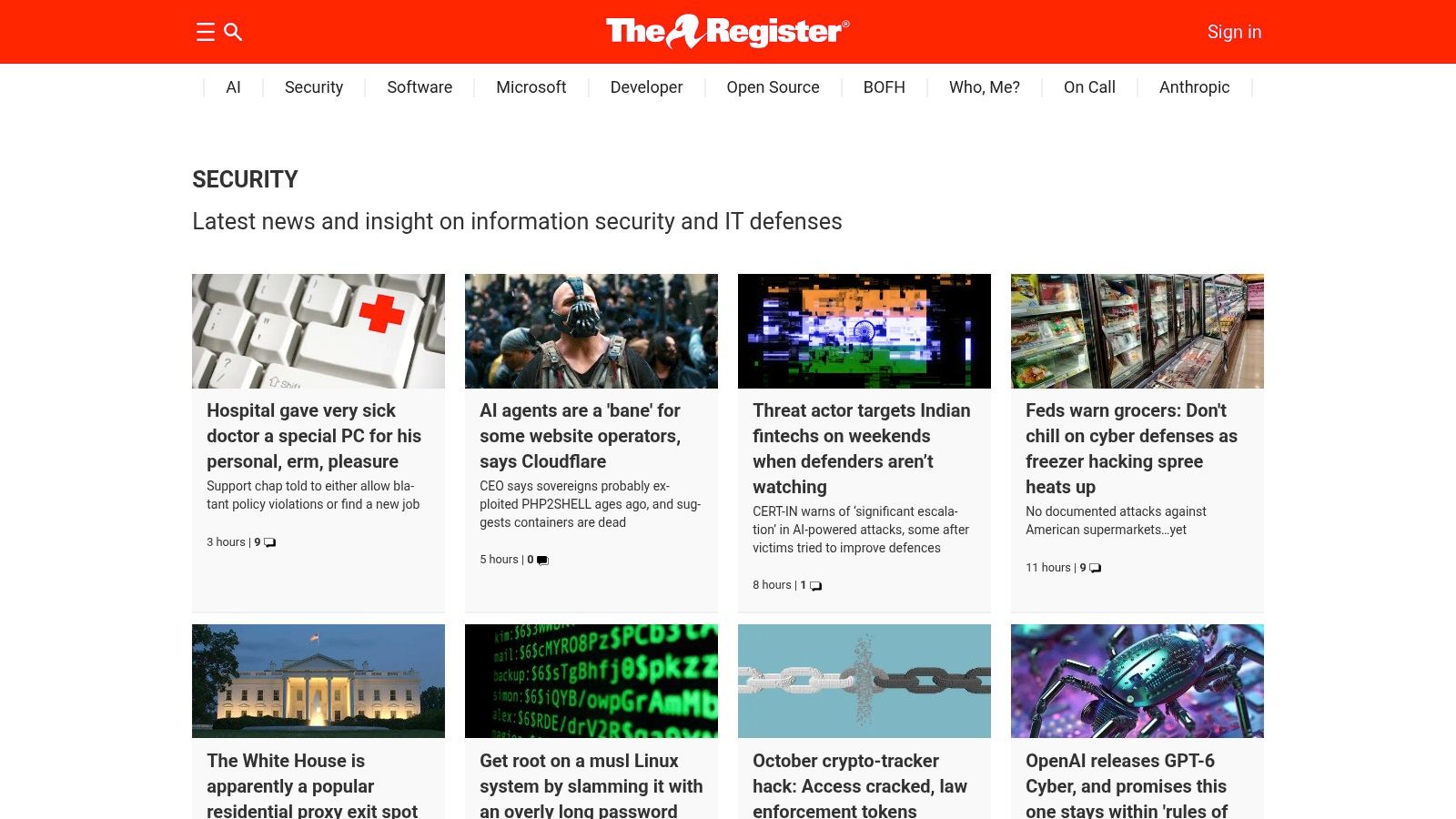
Enterprise risk rarely arrives labeled as privacy. It arrives as a cloud outage, a supplier dispute, a leaky database, or a policy fight. The Register's security section covers breaches, data leaks, privacy disputes, and technology policy inside that wider enterprise context, which makes it useful for CIOs and decision makers doing a regular scan.
The regulatory backdrop is global, not local. The European Commission page on GDPR as a success story notes that the GDPR became applicable across the European Union on 25 May 2018, with administrative fines of up to 4% of a company's annual global turnover. The Register helps you see where that kind of exposure intersects with vendors, infrastructure, and procurement.
Its tone won't suit everyone. Coverage can be informal and irreverent, and data protection isn't its sole focus, so you'll browse past unrelated enterprise stories. I still keep it in the mix for executives because it connects security failures to operational and governance consequences quickly. Just don't make it your only source for formal compliance tracking. It flags the fire. It doesn't maintain your evidence file.
How the seven sources differ in focus, audience and privacy-law depth
Item | Primary focus | Best for | Privacy-law depth |
|---|---|---|---|
IAPP, International Association of Privacy Professionals | Privacy, AI governance, and regulatory news | Compliance and governance professionals | High; regulatory and legislative analysis |
The Record from Recorded Future News | Cyber incidents, surveillance, and cybersecurity policy | Readers seeking timely incident reporting with policy context | Limited; less specialized in privacy-law tracking |
SecurityWeek | Cybersecurity, privacy, and compliance | Security teams tracking incidents and organizational risk | Moderate; covers privacy developments, with limited implementation detail |
BleepingComputer | Threats, ransomware, vulnerabilities, and breaches | IT teams and incident responders | Low; primarily focused on cybersecurity threats |
The Markup | Investigative reporting on data practices and technology's social impact | Readers seeking in-depth context on privacy and surveillance | Limited; selective investigations rather than routine legal updates |
Ars Technica | Technology, security, privacy, and data breaches | Technically engaged readers seeking incident context | Low; not a dedicated privacy-law tracker |
The Register | Enterprise technology, security, and privacy issues | IT professionals and executives following technology risks | Limited; privacy is one part of broader coverage |
Turning Data Protection News Into Everyday Action
A breach alert lands at 8 a.m. The privacy lead forwards the regulator analysis, security chases indicators, and leadership asks what it means for revenue. Without assigned jobs, the same story gets read three times and acted on zero times.
Assign each feed to a named role. Give the privacy lead IAPP for law and regulatory tracking. Give security operations BleepingComputer or SecurityWeek for incident detail and response steps. Give executives The Record, The Markup, or The Register for impact and enterprise risk. Keep Ars Technica as the swing read when engineering needs to understand mechanism before it patches or reconfigures.
Force every relevant story into one line in a shared log. Record the source, the affected process, the owner, and a single next step. That step might be a policy review, a vendor check, a consent flow audit, a retention fix, or no action with a reason. No owner means no relevance. Drop it and move on.
Enforcement data supports that discipline. The Legal 500 summary of the EDPB annual report for 2025 reported that European data protection authorities issued approximately €1.1 billion in GDPR fines in 2025. Treat audit evidence as an operational asset. Keep access logs, records of legal bases, risk assessments, processor due diligence, and incident timelines ready before a regulator asks. Short records beat long explanations.
Apply the same habit to settings and vendors. For smart home data in scope, check what each control limits, as NeoTeo explains Home privacy options in plain terms. Settings you cannot explain are settings you cannot defend. The same test works in procurement. Freeform Agency states a clear baseline for its own messages. Mobile information is not shared with third parties or affiliates for marketing or promotional purposes, and consent to receive SMS messages is not a condition of purchasing any goods or services.
If your team reads the news but still can't show which controls changed as a result, Freeform Company can help you turn data protection coverage into compliance assessments, data governance work, and AI integration that respects consent and accountability. Visit the blog to see practical guidance on digital compliance and data protection, then bring us one headline that worries you and we'll help you map it to a concrete next step.